Contents
Know a client is on track
Read whether a client is genuinely set up for success — two finish lines and five gates, all worked out from live signals rather than a checklist you tick.
- 1
Readiness at a glance
The Clients list already answers the anxious question — is this client actually working? — before you open anything. The Status column is a stage, not a subscription: where they are along the path from just-provisioned to fully set up. The Next step column names the one thing blocking them, and tags who it is waiting on: you, or the client.
So a glance down this list tells you which clients are moving, which are stuck, and which need a nudge from you versus a nudge from them. "What's the onboarding status?" up the top opens the same explanation you are reading now.
Open Clients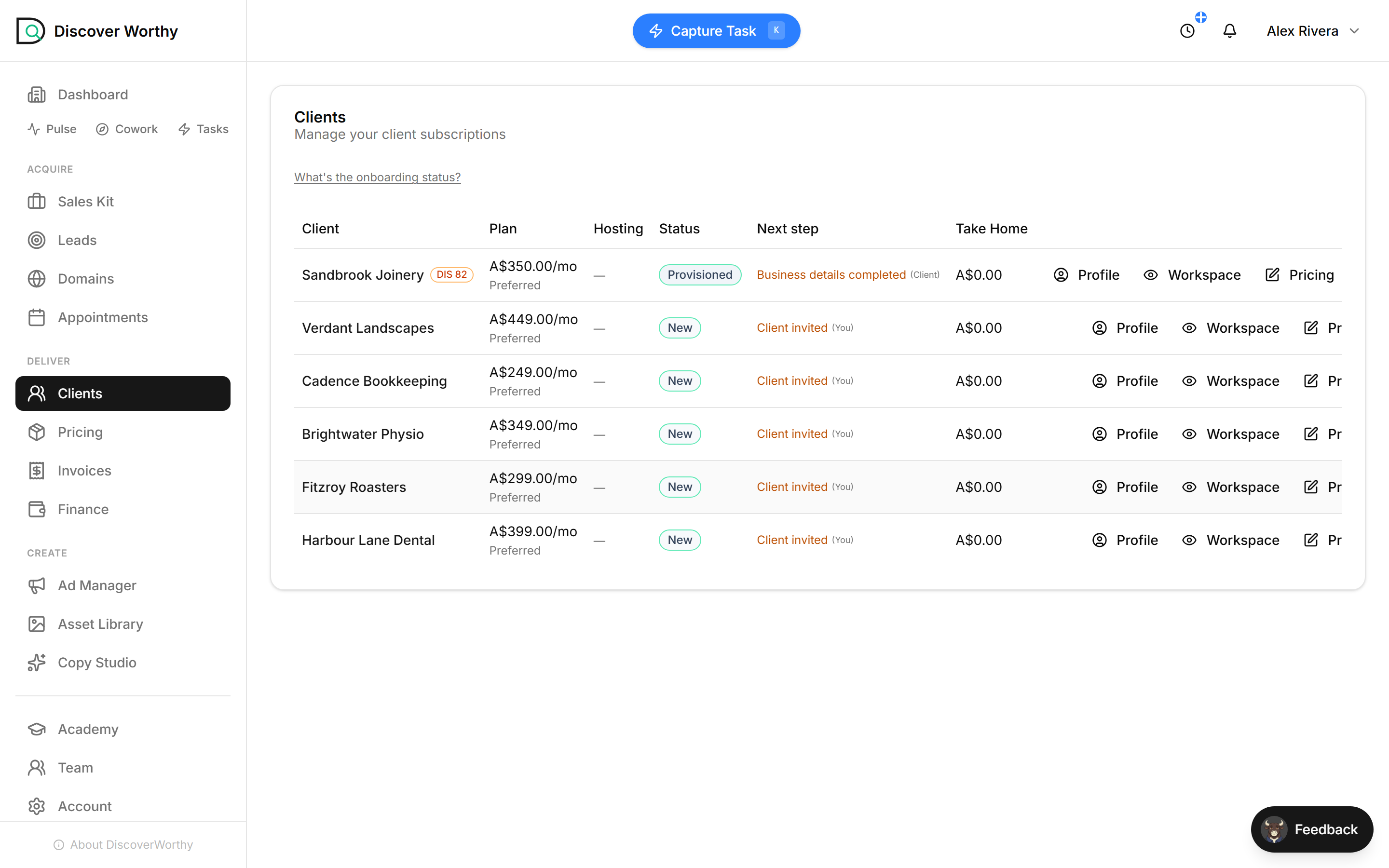
- 2
Two finish lines: Armed and Proven
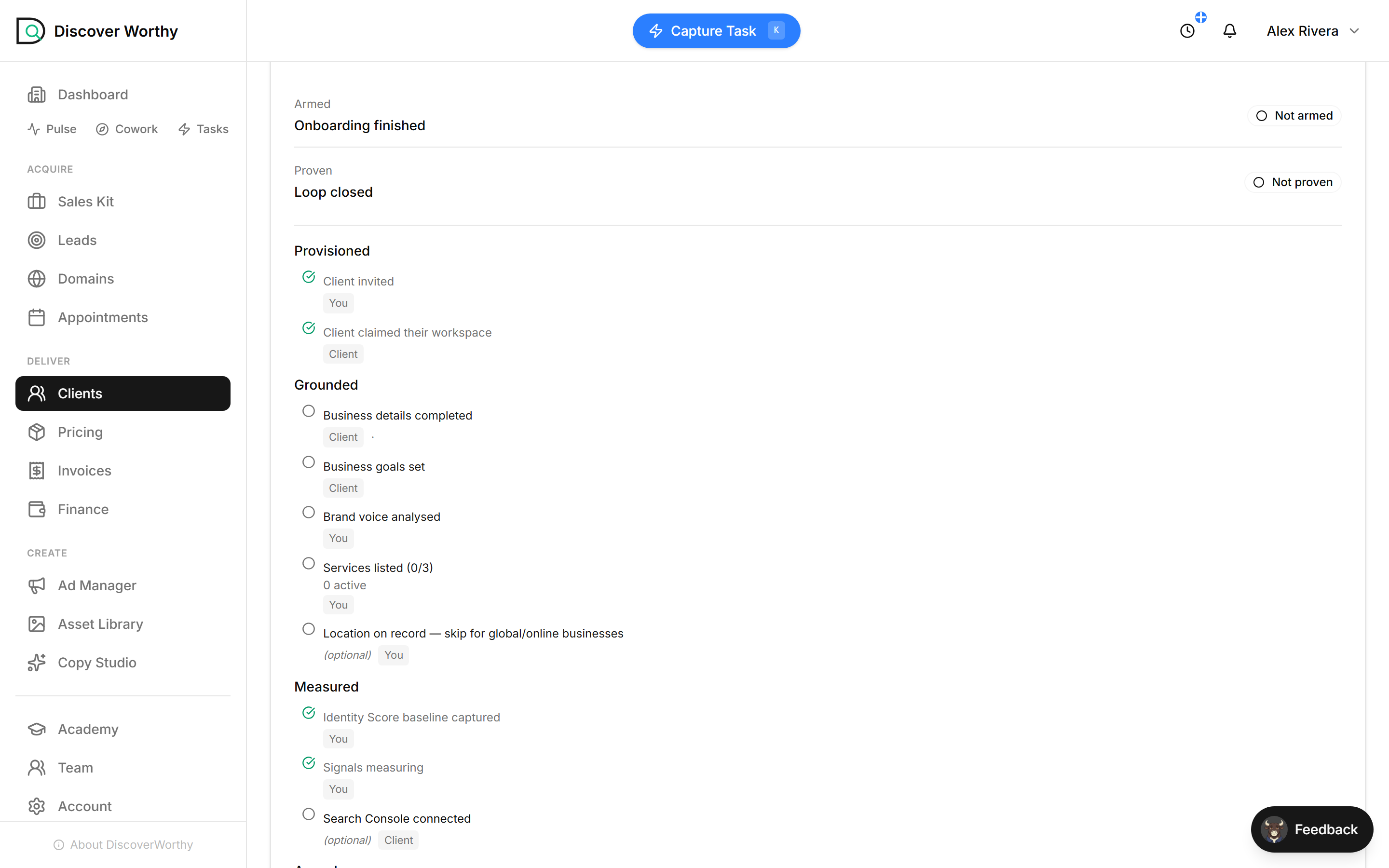
Open a client and the onboarding card gives you two verdicts, not one. Armed means onboarding is finished — there is nothing left for a human to click. Proven means the client is set up for success: the machine has closed the loop at least once, publishing something and getting a first signal back.
Armed is the end of setup. Proven is the thing that actually protects you from a month-two cancellation — a client who has seen the loop work once rarely walks. The progress bar tracks the five stages between the two.
- 3
The gates, and who owns each
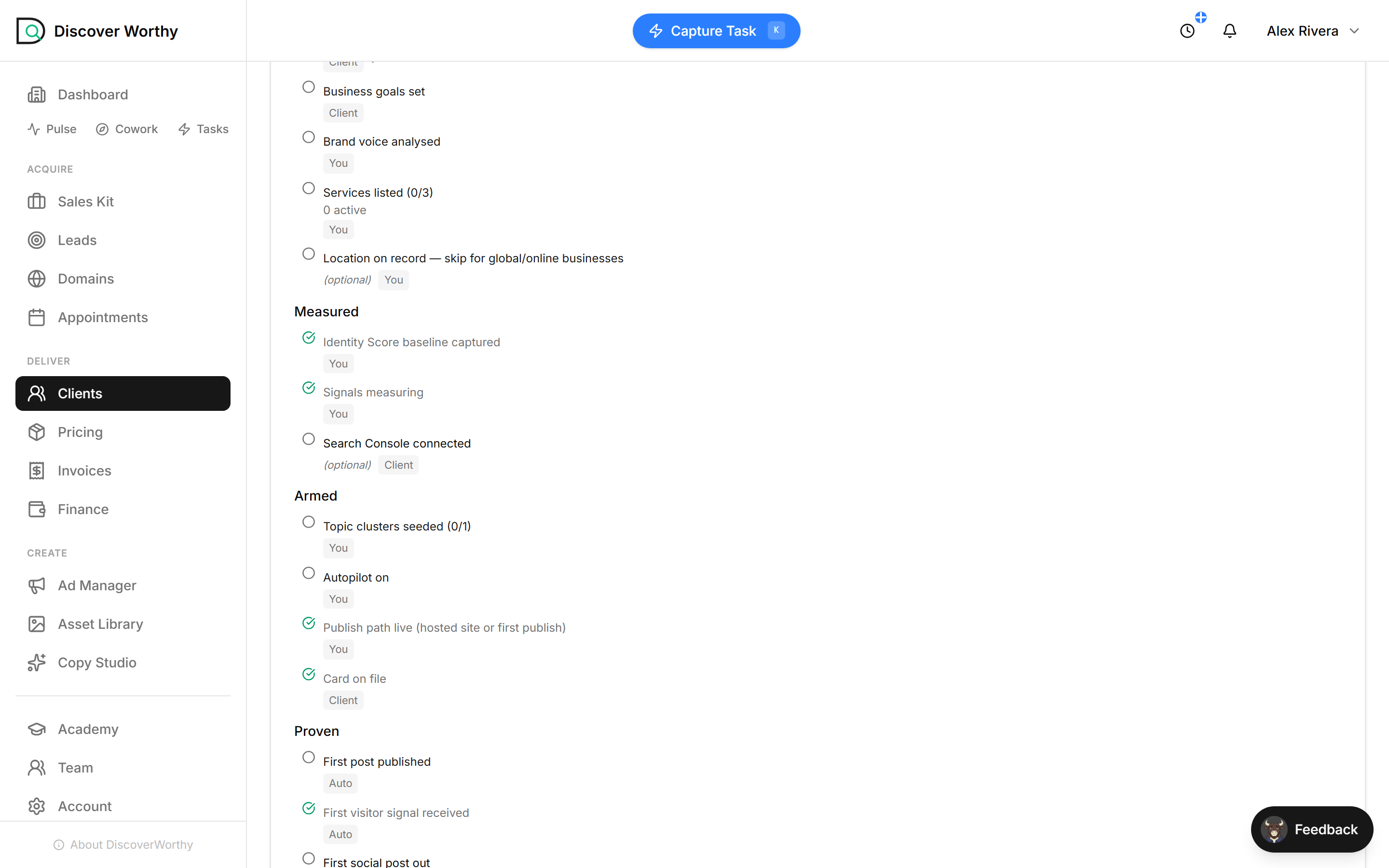
Under the verdicts sit the gates, grouped into stages — Provisioned, Grounded, Measured — each a specific, checkable thing: business details in, brand voice analysed, services listed, an Identity Score baseline captured.
Every gate carries a tag: You, Client, or Auto. That is the useful part — it tells you whose court the ball is in. A pile of "Client" tags means you are waiting on them and a chase is fair; a pile of "You" tags means it is on you.
Nothing here is a box you tick. Every gate is worked out from live signals — the voice actually exists, the score was actually captured. A ticked box can lie; a derived one cannot, so the verdict is always true.
- 4
What Armed and Proven actually take
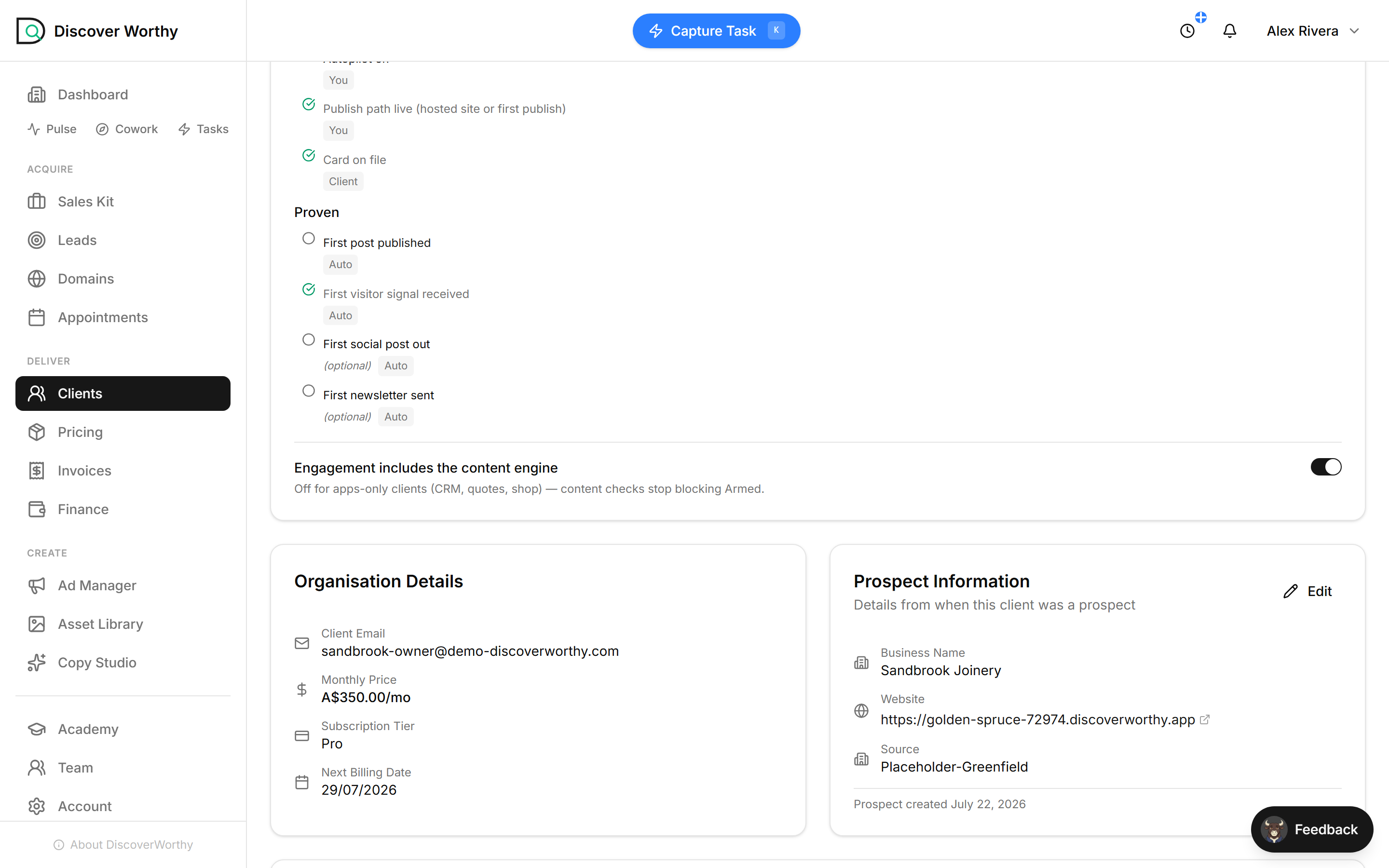
The last two stages are where a client crosses the lines. Armed needs the engine ready to run: a topic seeded, autopilot on, a live publish path, and a card on file. Proven needs the loop to have turned: a first post out and a first visitor signal back.
The Proven gates are tagged Auto — you do not tick them, the system watches for them and flips them when they happen. So once a client is Armed, Proven usually looks after itself; your job was finishing the setup.
A client on CRM, quotes or shop rather than content has a toggle to say so — it stops the content gates (clusters, autopilot, first post) from blocking Armed, so an apps-only client can still finish onboarding cleanly.
Next up
Your daily driver
The day-to-day of running a book of clients — reading what got delivered this week, keeping clients in the loop, working your queue, and drafting updates in seconds.
Ready to start?
Create your freelancer account and follow along.